Thruster Overview

Compact, cathodeless ECR propulsion delivering clean, reliable thrust tailored for next-generation microsatellite missions.
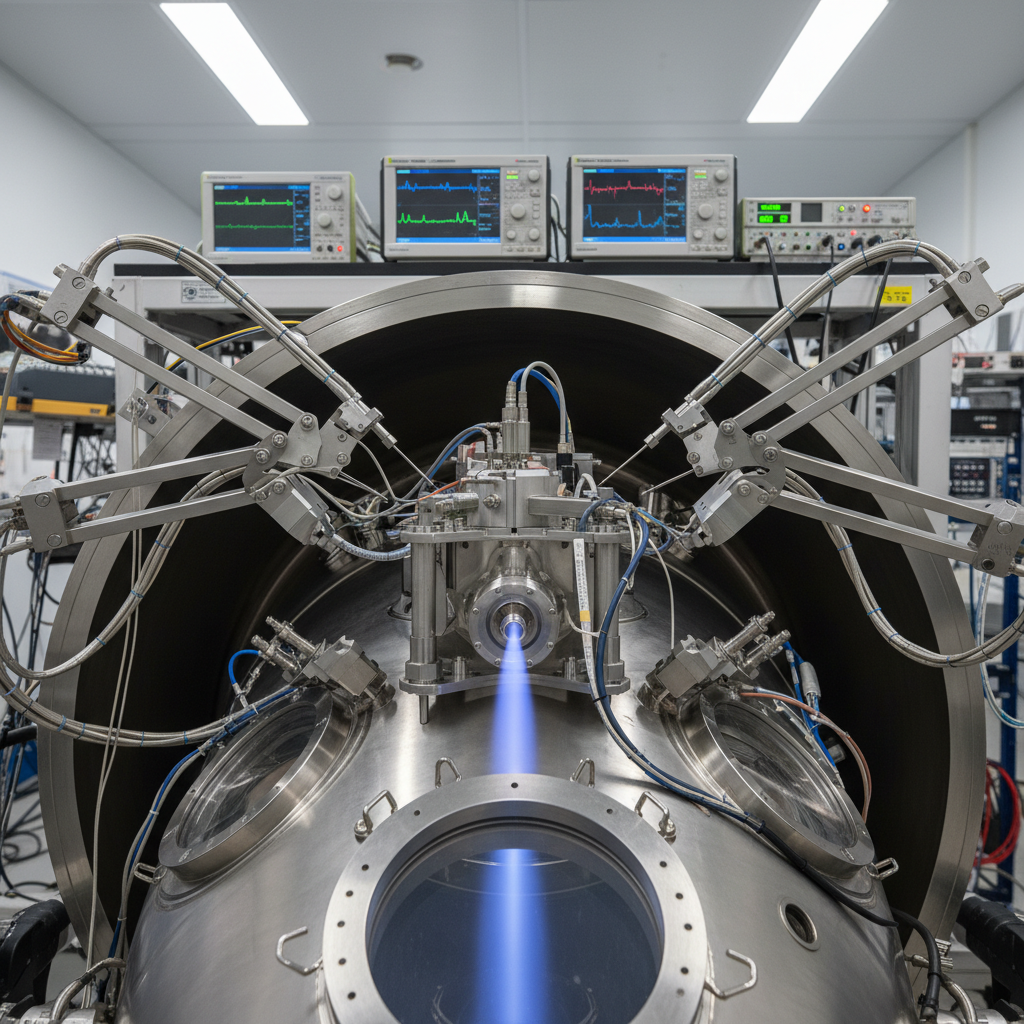
A photorealistic laboratory test setup focusing on the asymmetric pulsed neutralization system of an ECR ion thruster. The thruster sits at the center of a large cylindrical vacuum chamber, surrounded by coaxial cables, fiber-optic probes, and diagnostic sensors mounted on articulated metallic arms. Transparent viewports reveal a faint, time-averaged bluish plasma plume, while oscilloscope screens and data acquisition racks are visible in soft focus beyond the chamber. Cool white overhead lab lighting mixes with the subtle blue glow of instrumentation LEDs, creating a crisp, analytical atmosphere. Shot from a slightly elevated angle with the thruster framed by the circular chamber opening, the composition emphasizes experimental rigor and cutting-edge research in electric propulsion.
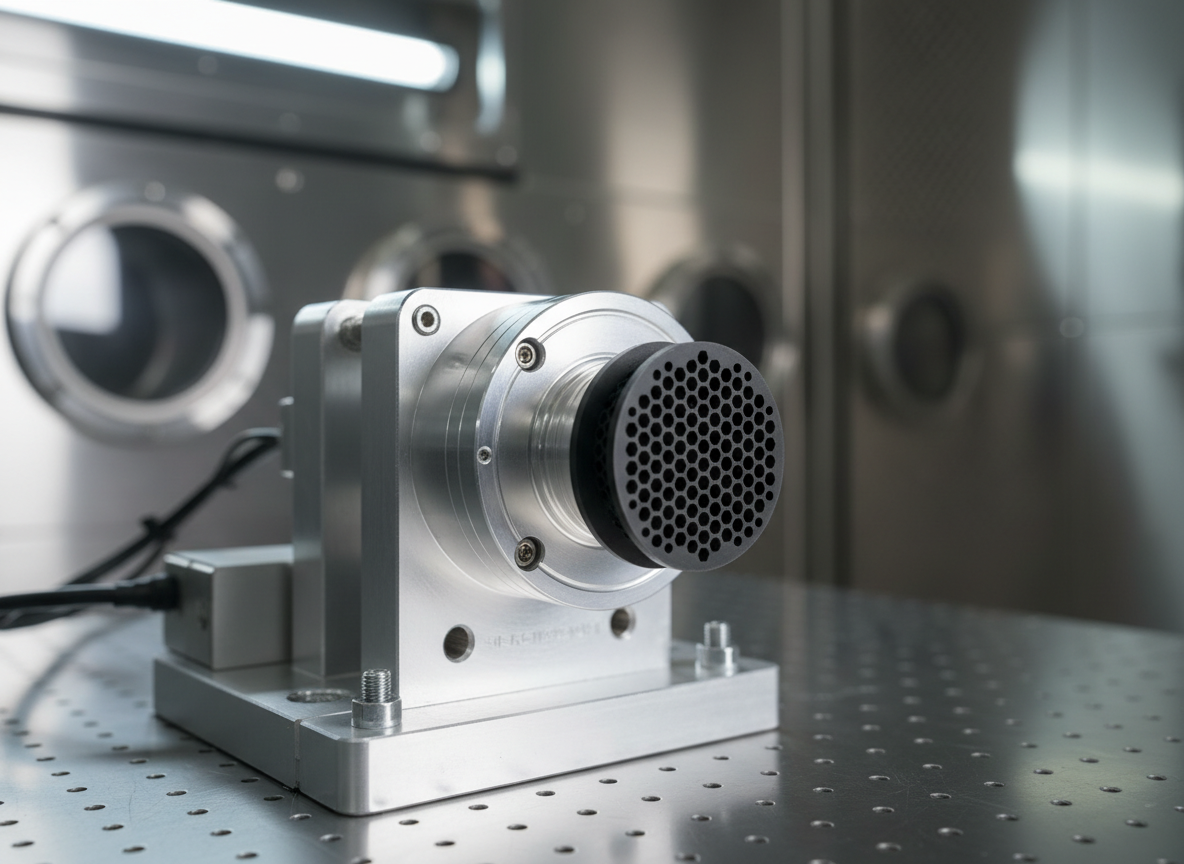
A highly detailed, photorealistic close-up of a compact cathodeless gridded ECR ion thruster for microsatellites, with a precisely machined metallic discharge chamber and a dark graphite grid assembly at its exit. The thruster is mounted on a clean optical bench inside a modern vacuum test chamber, with stainless steel walls and diagnostic ports blurred in the background. Cool, directional laboratory lighting creates crisp reflections on brushed aluminum surfaces and soft falloff into shadows, emphasizing fine textures and engraved calibration marks. Captured at eye level with a slightly off-center composition, sharp focus on the thruster and gentle bokeh behind. The mood is professional, technical, and innovative, with photographic realism and a clean, modern aesthetic tailored for an educational aerospace site.

Reimagining Microsatellite Electric Propulsion

Our cathodeless gridded ECR thruster combines compact design, high efficiency, and low contamination to unlock sustainable propulsion for microsatellites. By pulsing neutralization asymmetrically, we reduce erosion, extend mission lifetimes, and enable precise maneuvers on limited power budgets.

About

Environmentally Conscious Plasma Propulsion

Diagrams below illustrate how ECR heating, ion grids, and pulsed neutralization work together to minimize electrode erosion, suppress contamination of sensitive instruments, and cut propellant waste, resulting in lower orbital debris risk and greener satellite operations.
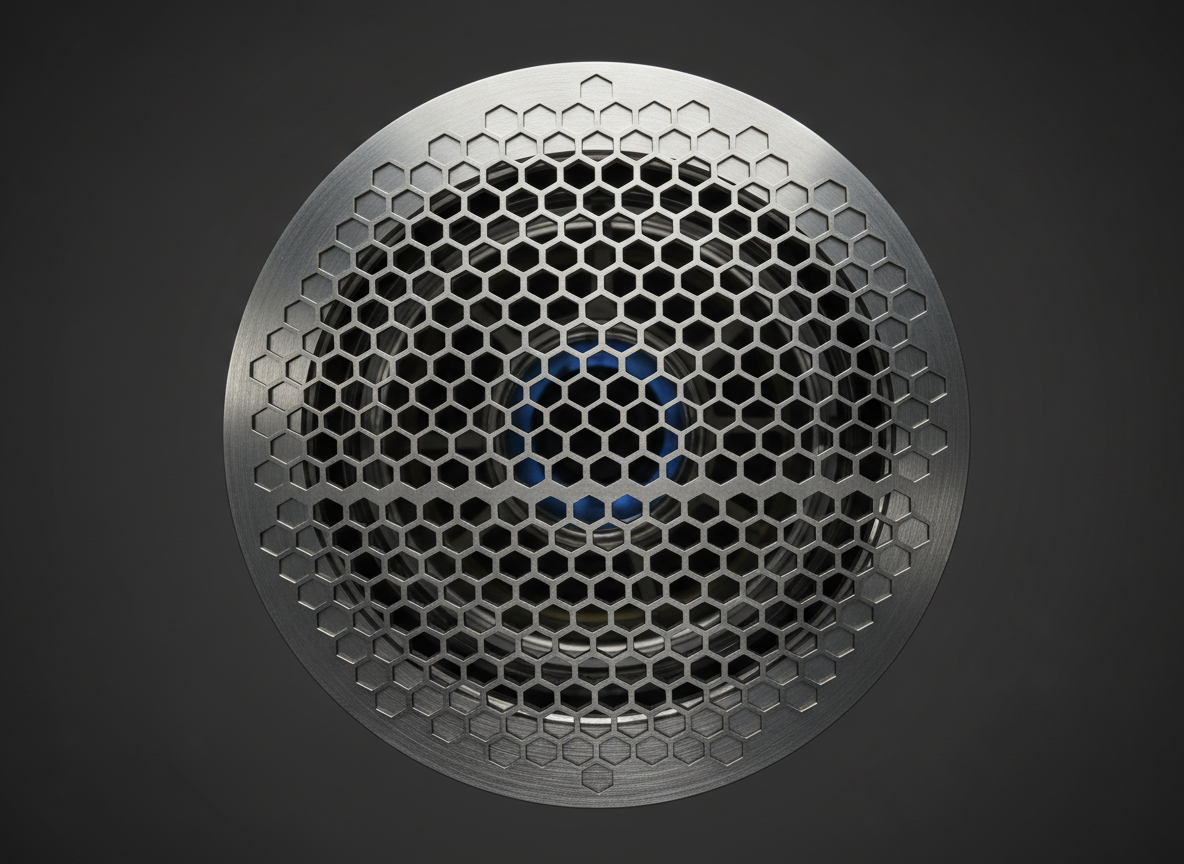
A close, photorealistic view of the gridded ion optics of a cathodeless ECR thruster, looking directly into the circular grid assembly. The front grid appears as a finely machined metallic disk perforated by a precise hexagonal pattern of tiny apertures, with soft specular highlights along the beveled edges of each hole. Behind it, slightly out of focus, a secondary grid structure and the shadowy interior hint at the plasma region. The thruster is set against a matte, charcoal-gray backdrop in a controlled studio environment. A single, diffused key light from the upper right creates gentle shadows that emphasize geometric regularity and surface quality. The mood is meticulous and elegant, spotlighting engineering precision.