Neutralization Experiments

Design rationale, diagnostics, and key results from asymmetric pulsed neutralization tests in laboratory conditions.
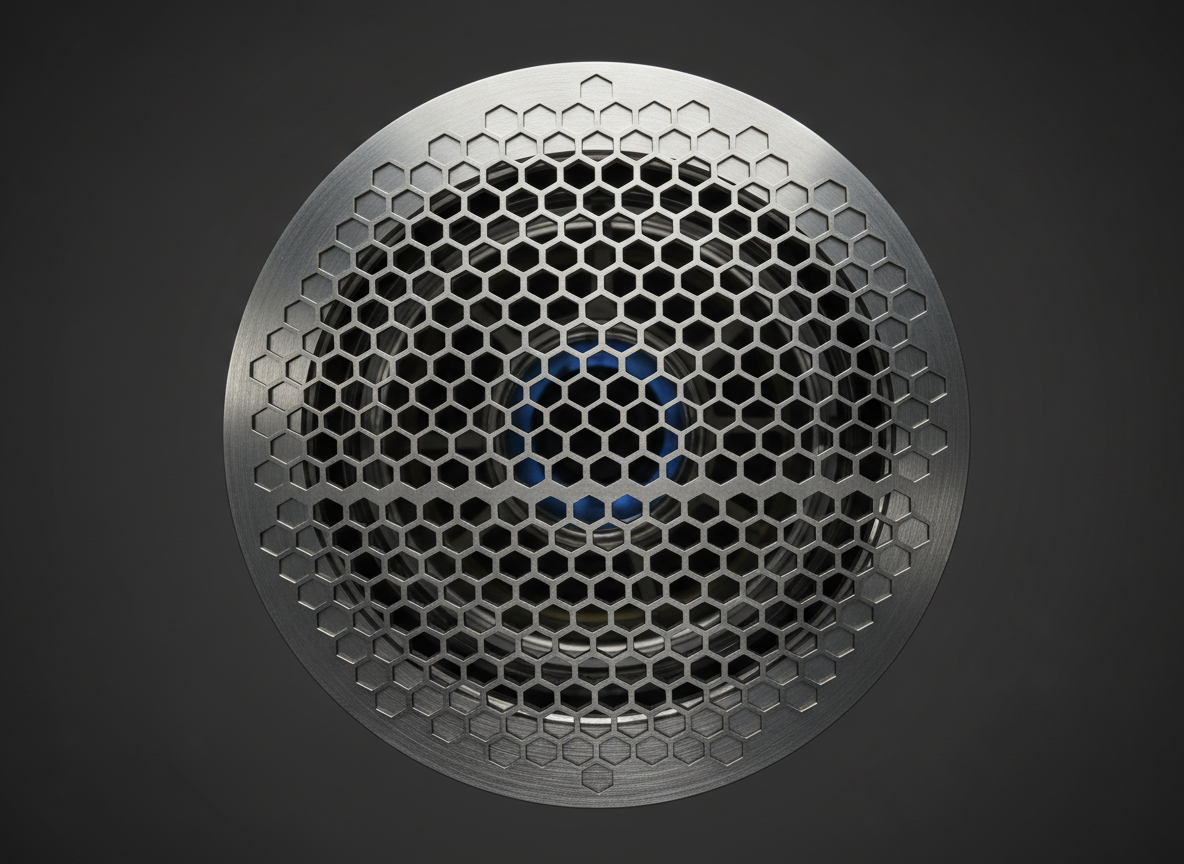
A close, photorealistic view of the gridded ion optics of a cathodeless ECR thruster, looking directly into the circular grid assembly. The front grid appears as a finely machined metallic disk perforated by a precise hexagonal pattern of tiny apertures, with soft specular highlights along the beveled edges of each hole. Behind it, slightly out of focus, a secondary grid structure and the shadowy interior hint at the plasma region. The thruster is set against a matte, charcoal-gray backdrop in a controlled studio environment. A single, diffused key light from the upper right creates gentle shadows that emphasize geometric regularity and surface quality. The mood is meticulous and elegant, spotlighting engineering precision.
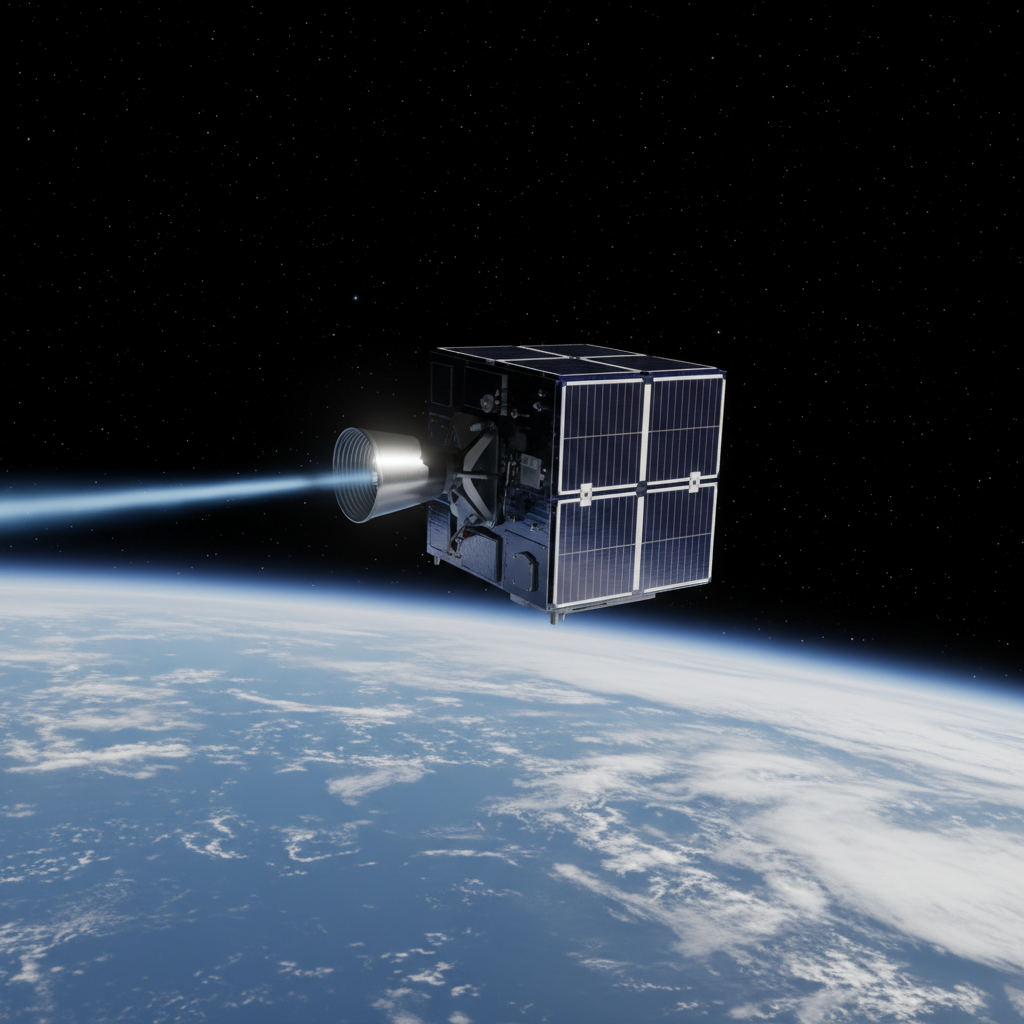
A small microsatellite in low Earth orbit equipped with a cathodeless gridded ECR ion thruster, rendered in photographic realism. The satellite’s compact body, covered in dark blue solar panels, extends a short boom where the metallic thruster emits a faint, narrow, pale-blue ion plume, barely visible against the curve of the Earth. Below, illuminated cloud formations and ocean hues fade toward the limb, while distant stars dot the blackness of space. The lighting mimics harsh, direct sunlight casting crisp highlights and stark shadows on the satellite, with soft Earth-reflected light filling underside details. Captured from a slightly below, three-quarter angle, the mood is aspirational and futuristic yet grounded in real engineering.

Thruster Physics and Architecture Overview

Explore the cathodeless gridded ECR thruster architecture, from magnetic confinement and microwave plasma generation to ion optics and asymmetric pulsed neutralization, with step‑by‑step explanations that connect fundamental plasma physics to design trade‑offs for microsatellite propulsion.
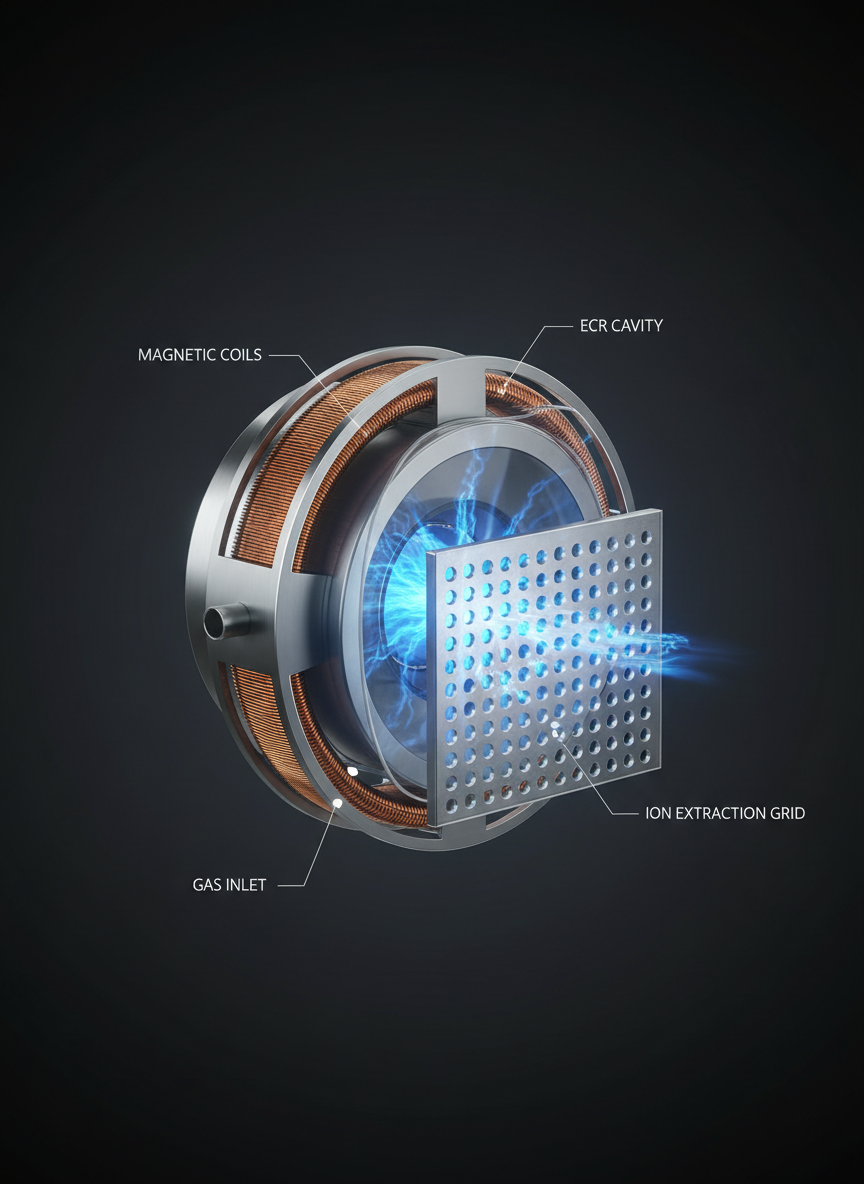
A cutaway-style, photorealistic visualization of a cathodeless gridded ECR thruster, showing internal components: the circular resonance cavity, magnetic coils, gas inlet, and multi-aperture ion extraction grid. The thruster floats against a dark, softly vignetted studio background, with translucent overlays revealing plasma glow in electric blue inside the chamber. Focused studio lighting from above and the left side creates subtle rim highlights on metal edges and a gentle gradient across the housing. The composition uses a centered, three-quarter perspective with sharp focus throughout, evoking a scientific illustration brought to life. The mood is precise and instructional, ideal for explaining design and simulation concepts in an advanced propulsion course.

Updates